Kasoori Methi
Also known as: kasuri methi, dried fenugreek leaf
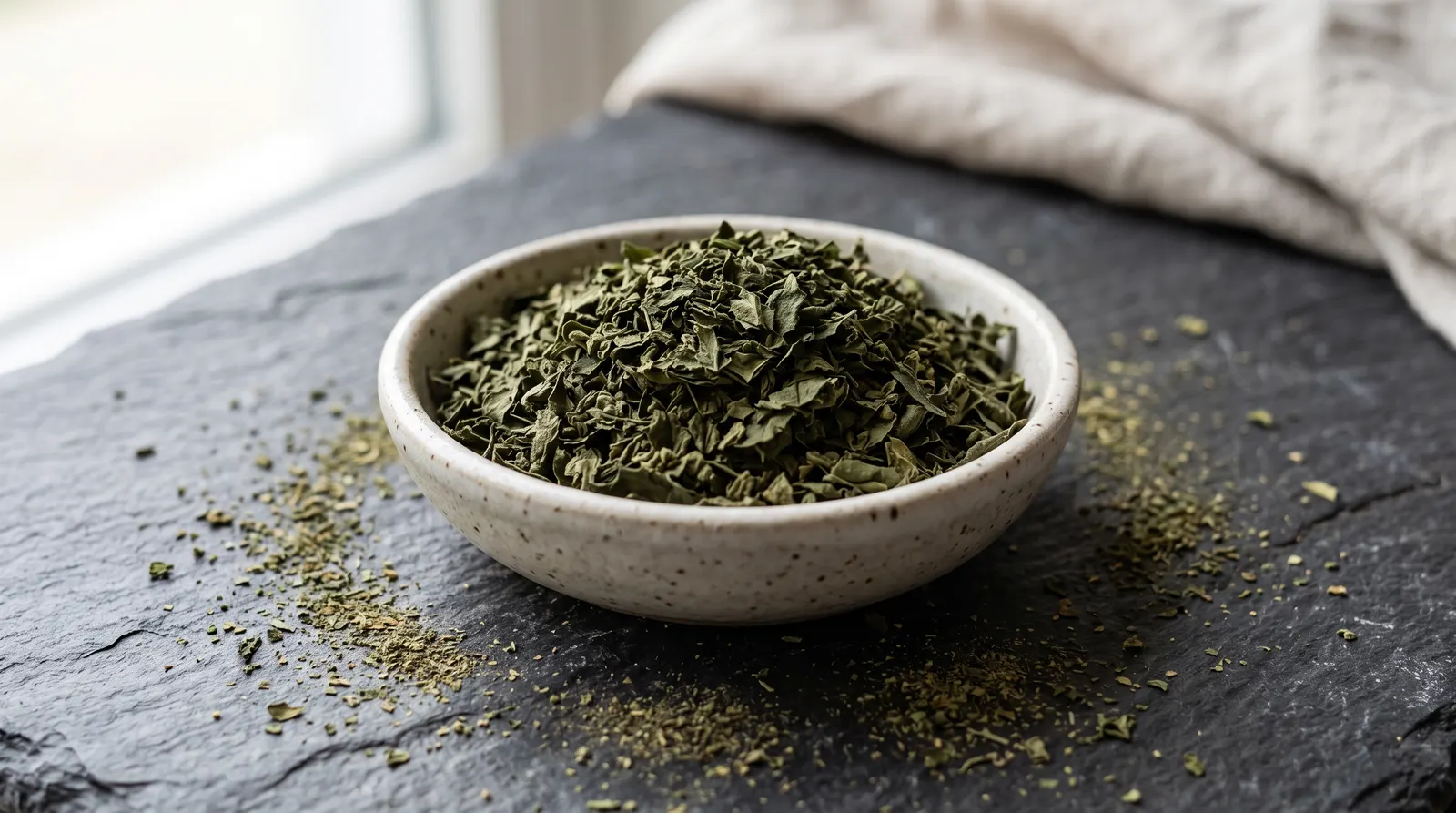
What Kasoori Methi is
The finishing gesture of North Indian restaurant cooking: a pinch of dried fenugreek leaves crushed between the palms and scattered over a finished butter chicken, dal or curry seconds before serving. The faintly maple, hay-like top note over the cream and tomato of butter chicken — the aroma most diners recognize instantly but few can name — is kasoori methi. It is the leaf of the same plant as fenugreek seed, sold as an entirely different product doing an entirely different job: the seed is a spice that goes in early, the dried leaf is a herb that goes in at the very end.
Fenugreek leaves harvested, dried and sold loose and crumbled or compressed into flat blocks. The name comes from Kasur, a town in Punjab long associated with the best dried leaf, and the spelling 'kasuri methi' appears on most packets interchangeably with kasoori. Color is the freshness test: good leaf is deep grey-green and smells through the packaging, while pale, yellowed leaf is old stock that has already lost most of what it was bought for. Kept airtight and dry it holds its aroma for months; nothing revives leaf that has already faded. Humid air makes the crumbs clump and fade, so a sealed jar kept away from the stove keeps it better than the packet it came in. Because the dried leaf is concentrated, most recipes call for only a teaspoon or so even for a large pot. Packets often contain thin, woody stalk pieces, which are bitter and can be picked out before use. Kasur lies in Pakistani Punjab, and much of the dried leaf sold today comes from Rajasthan, where Nagaur is a major trading centre.
Taste profile
Hay-like and faintly bitter, with a maple-adjacent sweetness — every part of the fenugreek plant shares the compound that gives maple syrup its smell. The leaf is much milder than the seed and behaves like a dried herb: heat destroys its aroma quickly, so it is stirred in off the flame or at the last moment, never simmered. Rubbing it between the palms immediately before adding it releases noticeably more aroma than sprinkling it straight from the packet, a step restaurant kitchens do without thinking. The dose is a pinch at a time, which is why a single packet outlasts most jars in the spice box.
Forms to buy
- Dried leaf, loose — The everyday form; 50-100g packets at Indian grocers for a few hundred yen.
- Compressed block — Sheets of dried leaf pressed together; crumble off what each dish needs.
- Fresh fenugreek leaf — A different product: cooked as a vegetable, greener and more bitter, and not a substitute for the dried finishing leaf.
The science behind it
The dried leaves hold volatile aroma compounds that fade with heat. The hay-like, slightly maple-tinged note is commonly linked to sotolon, the compound described as the main aroma component of fenugreek seed, though published measurements of the volatiles in the dried leaf as sold are scarce. A few seconds of frying in ghee, as some recipes do, releases a warmer and different aroma than sprinkling the leaves over a finished dish.
There is almost no published research on the dried leaf as a separate food, so nothing here shows that kasoori methi does anything specific in the body. Most of what the literature reports on fenugreek concerns the seed. A 2014 meta-analysis of ten blood sugar trials found lower fasting glucose and HbA1c, but the authors rated the trials as generally poor in quality. A 2025 meta-analysis of 26 randomized trials reported similar directions with very high heterogeneity, and a 2026 scoping review of adverse effects found the plant generally considered safe, with mild stomach upset the most common complaint and allergic reactions also reported. Those studies used seed doses of several grams a day, far above what a pinch of leaves delivers.
Sources: Effect of fenugreek (Trigonella foenum-graecum L.) intake on glycemia: a meta-analysis of clinical trials, Nutrition Journal (2014); Exploring the Adverse Effects of Fenugreek in Humans: A Scoping Review, Iranian Journal of Medical Sciences (2026); The effects of fenugreek (Trigonella foenum-graecum) seed on glycemic parameters: an updated systematic review and meta-analysis of randomized controlled trials, Avicenna Journal of Phytomedicine (2025); Sotolon (Wikipedia, with citations to the flavor chemistry literature)
This summarizes published research for general interest. Most studies use concentrated extracts at doses far above what a recipe contains, and none of it is medical advice — talk to a doctor before using any spice as a treatment.
In Vedic and ritual tradition
Kasoori methi has no separate place in the classical Ayurvedic lexicons. The Sanskrit methika and the Hindi methi name the plant, and the classical materia medica discusses the plant and its seed rather than a dried-leaf product. Kasoori methi is better understood as a North Indian kitchen technique, most associated with restaurant cooking. There is no documented royal, temple or Mughal-era history of the dried leaf, and the commonly repeated stories about the name and origin are best treated as folklore. The tradition therefore belongs to the whole plant, and the dried leaf is a culinary refinement of it. Practical kitchen guidance on the leaf comes mainly from cooking writers and spice sellers rather than scholarly work.
- Raj Nighantu (13th century) — The 13th-century Raj Nighantu identifies methika as another name for methi (Trigonella foenum-graecum) and lists seventeen Sanskrit synonyms. The classical sources describe no dried-leaf product, so the plant-level tradition applies here without any claim about kasoori methi itself.
Halal note
Plain dried leaf with no processing beyond drying, kasoori methi carries no halal concern. Fenugreek-based supplement products are a separate packaged-goods category and the only place a capsule or coating question ever arises.