Holi Foods
Also known as: festival of colors food, gujiya, thandai
What Holi Foods is
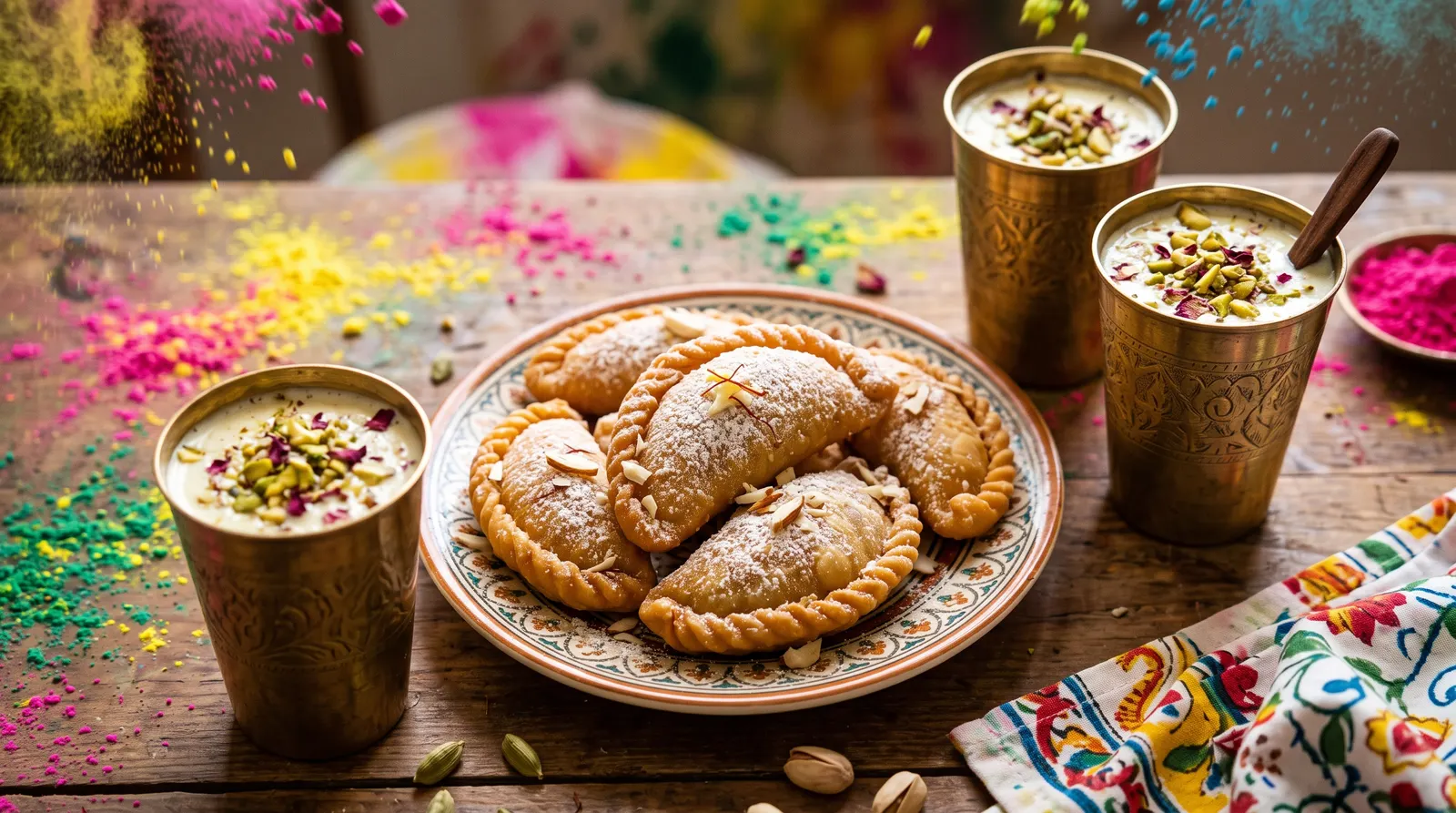
Holi, the spring festival of colors, arrives with a food spread as recognizable as the powder itself: gujiya fresh from the karahi, glasses of cold thandai, puran poli and dahi bhalla on the same table. It is the year's most indulgent single day of eating, and deliberately so — sweet, fried and dairy-rich. It is also a day with a night before it, and the food belongs to both halves.
Where it comes from
Holi marks the end of winter and the arrival of spring, and the menu follows the season's logic: the ghee, khoya and milk that carried a household through the cold months are finished off in one celebration before the heat begins. Gujiya is the emblem — a crisp half-moon dumpling of refined flour, fried and filled with sweet khoya, coconut, cardamom and dried fruit, Thandai, cold milk blended with almond, fennel, pepper and rose, cools a day spent outdoors; at some gatherings the traditional cannabis-infused variant called bhang is served, and its legal status varies from place to place even within India. Puran poli — a flatbread stuffed with jaggery and lentils — and dahi bhalla, soft lentil dumplings in seasoned yogurt, spread the table between sweet and savory so the day never tips fully into sugar. The rest of the spread runs salty and cooling — mathri and papri to snack on, spiced chhole, glasses of buttermilk — because a day spent outdoors in the sun asks for it. In the Braj region around Mathura and Vrindavan, where Holi is celebrated longest, thandai shops set up in the streets for the crowds. Holi is also not a single day. Holika Dahan, the bonfire, is lit the night before and is the ritual centre of the festival; the colour day that follows has different names in different states, and in the Braj towns the celebrations run for days around it.
The food rules
- Gujiya — Fried sweet dumplings with a khoya, coconut and dried-fruit filling — the single dish that says Holi across north India.
- Thandai — Chilled milk with almond, fennel, pepper and rose.
- Puran poli and dahi bhalla — The jaggery-stuffed flatbread and the yogurt-dumpling dish that carry the sweet-savory spread.
- The night before — Holika Dahan is marked with a bonfire and something simple and fried to share; the gujiya and the full table belong to the colour day.
What it means today
Sweet shops in north India queue for gujiya in the days before Holi, and Holi events abroad — community gatherings, restaurant parties — recreate the same table, color powder at the gate and fried snacks inside. On restaurant menus the chaats, dahi bhalla's everyday cousins, are the year-round echo of the spread. The festival has no restaurant form of its own: gujiya is a household and sweet-shop item, made in batches at home or bought by the tray, and a restaurant that lists it is usually a sweets shop with tables rather than a kitchen that cooks it to order. What does appear on menus is thandai, as a seasonal drink in the weeks around the festival, and in some places a Holi set menu that is really the ordinary menu with a glass of it included.
In a restaurant
At a Holi gathering, treat the colour as part of the invitation: you will probably be marked on arrival, and the easy response is to be marked and to mark back rather than to dodge. Wear old clothes, expect the powder to stain skin for a day and hair for longer, and keep your phone in a pocket. Food comes after the colour, and the sweets are usually handed round by the family rather than left on a table. The one thing worth being careful about is thandai: some hosts serve a bhang version, and it looks identical to the plain one. Ask before you drink, particularly if you are driving or working afterwards, and do not assume the person offering it knows what is in the glass. If you are invited into a home for the meal, take a little of everything and finish what you take; the table is built on the assumption that people will be hungry after the morning. If you are hosting, label the bhang clearly and keep a plain batch, keep the food covered while the colour is flying, and put out water and buttermilk. If you are only coming for the food, say so early — plenty of people skip the colour entirely and arrive for the gujiya and the conversation.
A common misunderstanding
The common picture is of one day, one crowd, everyone covered in colour and drinking thandai. In practice the colour day has different names and different food by region. Bhang is far from universal: it is absent from most family parties, where a great many households mark the day dry. The festival's food is also not all fried sweets. The ghee-heavy spread is genuinely the point in the north, but in Maharashtra and Gujarat the day leans on puran poli and a proper meal, and in the south it is barely a food festival at all. The other assumption worth correcting is that the sweet food is a clear-out of the pantry. Gujiya is made in bulk because it is a sweet given away — to neighbours, to relatives, to anyone who visits — and the size of the batch is a statement about the household that made it.